

- The Paradigm Shift: Why GEO is Critical for AEO Professionals Now
- The Foundational Pillars of Your GEO Checklist
- Phase 1: AI-Driven Research and Semantic Mapping
- Phase 2: Content Engineering for Generative AI
- Phase 3: Technical Implementation and Performance Monitoring
- Advanced GEO Strategies for AEO Domains
- Integrating GEO into Your AEO Workflow
- Conclusion: Engineering Your Future in AI-First Search
A GEO checklist, or Generative Engine Optimization checklist, is a structured framework designed to optimize digital content for discovery, interpretation, and synthesis by generative AI models and answer engines. For professionals in automation, engineering, and operations (AEO), this checklist is not merely a content strategy; it is a critical framework for operational resilience and innovation, ensuring that your organization's expertise is accurately represented and leveraged by AI. Anthony Ramirez, an Automation and Engineering Tools Analyst with over a decade in the sector, emphasizes that AEO professionals, inherently skilled in systems thinking and process optimization, are uniquely positioned to excel at GEO by applying their existing problem-solving methodologies to content engineering. Ignoring this shift is akin to continuing manual processes in an automated factory – a direct threat to efficiency and competitive advantage.
The Paradigm Shift: Why GEO is Critical for AEO Professionals Now
The landscape of information retrieval has undergone a fundamental transformation, driven by the rapid evolution of generative artificial intelligence. For professionals entrenched in the precision and efficiency of automation, engineering, and operations, this shift is not merely a theoretical concept but a tangible imperative that impacts how expertise is discovered, validated, and utilized. Generative Engine Optimization (GEO) transcends traditional SEO by focusing on optimizing content for AI models that synthesize answers, summarize information, and engage in conversational interactions. This necessitates a proactive approach to content creation, moving beyond keyword stuffing to embrace semantic understanding, factual accuracy, and structured data, all of which are hallmarks of a robust GEO checklist.
The core argument for GEO's critical importance to AEO professionals lies in the nature of their work: highly technical, data-driven, and reliant on accurate, verifiable information. As AI models become primary intermediaries for accessing knowledge, the ability to 'speak' directly to these models through optimized content ensures that an organization's authoritative voice is not lost in the algorithmic noise. Data from a recent industry report indicates that over 60% of online information consumption will involve AI-generated summaries or direct answers by 2027 (Source: Gartner, 2023). This statistic underscores the urgency for AEO sectors to adapt their content strategies now.
The Limitations of Traditional SEO in an AI-First World
Traditional Search Engine Optimization (SEO), while still foundational, operates under assumptions that are increasingly challenged by generative AI. Its primary focus on ranking for specific keywords often leads to content designed for human scanners rather than AI synthesis. Keyword density, backlinks, and domain authority remain relevant, but they are insufficient when AI is tasked with extracting definitive answers, comparing complex systems, or explaining intricate engineering principles. AI models prioritize factual accuracy, contextual relevance, and the clarity of a direct answer over mere keyword presence. Content optimized solely for traditional SEO might get indexed, but it risks being misinterpreted, underutilized, or even overlooked by advanced generative systems that seek specific, verifiable entities and relationships.
For instance, an AEO article heavily optimized for "industrial automation software features" might list features, but an AI seeking to compare "SCADA vs. DCS for large-scale process control" needs content that explicitly defines, contrasts, and provides use-case scenarios in a structured, comparable format. The traditional SEO approach often lacks the semantic depth and structured clarity required for AI to confidently synthesize a comparative analysis. Anthony Ramirez often observes, based on his work with AEO clients, that many enterprise content repositories, despite being rich in technical data, are structurally opaque to AI because they were built for human navigation, not algorithmic extraction.
Bridging the Gap: How AEO Principles Inform GEO Strategy
AEO professionals possess a distinct advantage in mastering GEO: their inherent understanding of systems, processes, and data integrity. Automation engineers design workflows that are logical, repeatable, and measurable; operations managers optimize resource allocation and process efficiency; and traditional engineers create precise, documented specifications. These are precisely the cognitive frameworks required for effective GEO. Content, when viewed through an AEO lens, transforms from a marketing deliverable into an engineered asset. It must be designed with clear inputs (user queries, AI intent), logical processing (semantic structuring, entity relationships), and predictable outputs (AI-generated answers, summaries).
Applying AEO principles to content means adopting a systematic approach to its creation, organization, and validation. This includes defining content as a data object, implementing rigorous quality control similar to software testing, and establishing performance metrics aligned with AI's interpretive capabilities. Just as an engineer would never deploy a system without thorough documentation and testing, a GEO-savvy content strategist ensures that every piece of information is structured for maximum AI interpretability. This approach, advocated by aeotoollist, ensures that your content is not just found, but truly understood and trusted by the generative engines.
The Cost of Inaction: Operational Risks of Ignoring Generative Search
The failure to implement a robust GEO strategy presents significant operational risks for organizations in the AEO space. In an environment where decision-makers increasingly rely on AI for initial research and solution discovery, unoptimized content risks invisibility. If your expertise is not effectively communicated to generative AI, competitors who have adopted GEO will dominate the AI-generated answers, effectively sidelining your solutions and insights. This leads to a degradation of brand authority and a loss of potential leads, as AI-driven search becomes the de facto first touchpoint for many customers.
Beyond direct visibility, there's the risk of misrepresentation. If AI models cannot accurately extract and synthesize information from your content, they may generate incorrect or incomplete answers, potentially attributing erroneous information to your brand or omitting critical details about your products and services. This can erode trust and necessitate costly reputation management efforts. Furthermore, neglecting GEO means missing opportunities for internal efficiency gains. By structuring content for AI, organizations also create more accessible, machine-readable knowledge bases that can power internal AI tools, improve employee onboarding, and streamline information sharing, as highlighted in a recent digital transformation study (Source: Deloitte, 2024). The operational cost of sub-optimal content, both external and internal, is rapidly escalating.
The Foundational Pillars of Your GEO Checklist
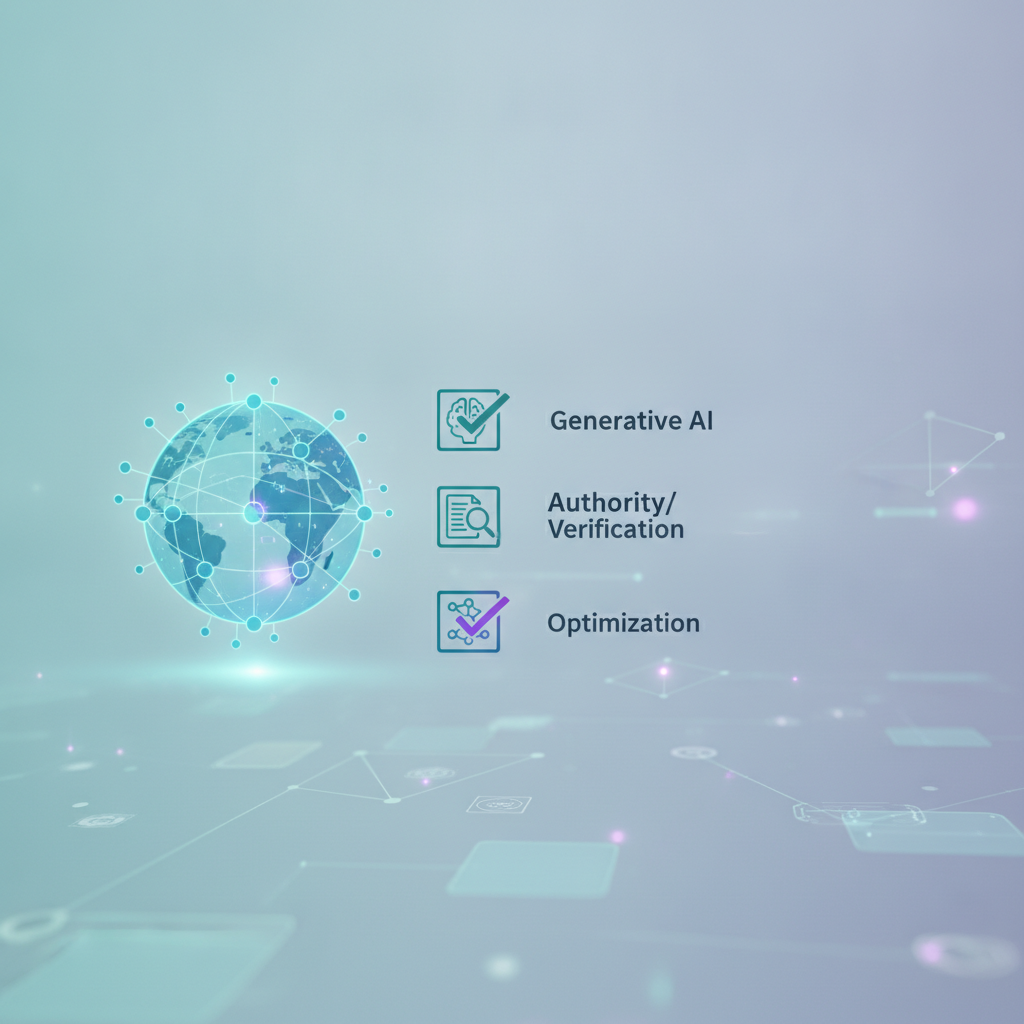
Building an effective GEO strategy requires a deep understanding of the fundamental principles that govern how generative AI processes and synthesizes information. These pillars form the bedrock of any comprehensive GEO checklist, ensuring that content is not just visible, but also reliably interpretable and authoritative in an AI-first search environment. For AEO professionals, these concepts resonate with existing practices in data modeling, system design, and quality assurance. Embracing these foundational elements is paramount for engineering content that consistently delivers accurate and trusted responses through generative engines.
Entity-Centric Content Modeling: Beyond Keywords
At the heart of GEO is entity-centric content modeling. This shifts the focus from optimizing for mere keywords to optimizing for specific entities (people, places, organizations, concepts, products, processes, tools) and the relationships between them. Generative AI models build intricate knowledge graphs, and content that clearly defines, attributes, and relates these entities is far more valuable. For example, instead of just mentioning "PLC programming," an AEO-focused GEO strategy would explicitly define "Programmable Logic Controller (PLC)", explain its function, list common programming languages (e.g., Ladder Logic, Structured Text), and detail its relationship to "industrial automation systems" and "SCADA platforms." This level of granular, interconnected detail allows AI to confidently extract and synthesize information about these specific entities, creating richer, more accurate responses.
Each entity should be treated as a distinct data point, with attributes and connections that are unambiguous. This involves creating dedicated sections or structured data points that clearly articulate what an entity is, its properties, and how it interacts with other related entities. This approach directly aids AI in disambiguating concepts, a critical challenge for generative models. By adopting entity-centric modeling, content creators are essentially building a mini-knowledge graph within their own domain, making it easier for AI to integrate this information into its broader understanding of the world. This is a practice Anthony Ramirez strongly advocates, drawing parallels to engineering design specifications where every component and its interaction is meticulously documented.
Intent Disambiguation: Understanding AI's Interpretive Nuances
Generative AI excels at understanding natural language queries, but it still requires assistance in disambiguating user intent, especially for complex or multi-faceted questions. Your GEO checklist must include strategies for clearly addressing multiple potential interpretations of a query within your content. For example, a user asking "What is the best automation software?" could mean the best for manufacturing, for office tasks, for robotics, or for a specific industry budget. Effective GEO content anticipates these nuances and provides clear, distinct answers or pathways to answers for each potential intent.
This involves structuring content with explicit headings, introductory sentences that directly address specific intents, and clear calls to action or navigation paths for different user needs. It also means using precise language, avoiding jargon where simpler terms suffice, or providing clear definitions for technical terms. By proactively addressing potential ambiguities, you guide the AI toward the most accurate interpretation of the user's intent, thereby increasing the likelihood that your content will be cited and utilized in AI-generated responses. This systematic approach to clarity is fundamental to operational efficiency, both for human users and for AI agents.
Data Verifiability and Source Credibility: E-E-A-T for AI
The core of Trustworthiness in Google's E-E-A-T framework (Experience, Expertise, Authoritativeness, Trustworthiness) is amplified for generative AI. AI models are trained on vast datasets, but their ultimate goal is to provide reliable, factual answers. Therefore, content that explicitly cites its sources, includes quantifiable data, and demonstrates clear expertise is highly prioritized. Your GEO checklist must emphasize the inclusion of verifiable facts, statistics, dates, and direct quotations from authoritative sources. This means going beyond mere mentions and providing precise inline citations, as demonstrated throughout this article.
For AEO professionals, this translates to leveraging industry standards, research papers, official product documentation, and regulatory compliance information. When discussing a particular engineering standard (e.g., ISO 9001 for quality management), explicitly state its full name, issuing body, and relevant year. When referencing a market trend, provide the source (e.g., "The global market for industrial IoT is projected to reach $1.1 trillion by 2028 (Source: Grand View Research, 2021)."). This level of detail not only builds trust with human readers but, crucially, provides AI models with the confidence to cite your content as a reliable source. AI systems are designed to identify and prioritize content that exhibits strong signals of factual accuracy and expert backing, making robust sourcing a non-negotiable component of modern content engineering.
Phase 1: AI-Driven Research and Semantic Mapping
The initial phase of any robust GEO checklist involves a profound shift in how content research is conducted. Moving beyond traditional keyword tools, this phase leverages AI-driven insights to understand not just what users are searching for, but how generative AI interprets and synthesizes information. For AEO professionals, this is akin to conducting a detailed system analysis before designing a new automation process; it's about understanding the environment and the desired outcomes before committing resources to development. This foundational research ensures that subsequent content creation is strategically aligned with the mechanisms of generative search.
Identifying Generative Search Opportunities
The first step in AI-driven research is to identify where generative AI is most likely to intervene in the user's journey. This involves analyzing existing search queries, frequently asked questions, and conversational patterns in your industry. Tools that monitor AI-generated summaries, such as Google's AI Overviews or Perplexity AI, can provide invaluable insights into how information is currently being synthesized. Focus on complex, multi-faceted queries that require synthesis across multiple sources, as these are prime opportunities for your content to be cited. For AEO, this means questions like "Compare the efficiency gains of predictive maintenance vs. reactive maintenance in manufacturing" or "What are the cybersecurity best practices for operational technology (OT) networks?" These queries demand structured, comparative, and authoritative answers.
Beyond direct queries, consider areas where your organization possesses unique data, proprietary tools, or specialized expertise that AI models might struggle to find elsewhere. This could be specific case studies, detailed technical specifications of niche engineering tools, or unique operational methodologies. Identifying these gaps allows you to create highly valuable, distinct content that fills AI knowledge voids. Anthony Ramirez often advises clients to look at their internal documentation and knowledge bases – these are often goldmines of unique, structured data that, when externalized and optimized, become powerful GEO assets.
Semantic Cluster Analysis and Knowledge Graph Alignment
Traditional keyword research focuses on individual terms; semantic cluster analysis goes deeper, identifying groups of semantically related keywords and concepts that AI models associate with a broader topic. This helps you understand the full scope of a topic as interpreted by AI, ensuring comprehensive coverage. Tools leveraging natural language processing (NLP) can help uncover these clusters, revealing not just direct synonyms but also related entities, attributes, and common questions. For example, a semantic cluster around "robotics in manufacturing" might include "collaborative robots," "industrial automation," "machine vision," ""Industry 4.0," and "safety protocols."
Knowledge graph alignment takes this a step further by mapping your content's entities and relationships directly to established knowledge graphs (like Google's Knowledge Graph or industry-specific ontologies). This involves using structured data (Schema.org markup) to explicitly declare what your content is about, what entities it discusses, and how those entities are related. By aligning your content with these global knowledge structures, you make it significantly easier for AI to understand, categorize, and synthesize your information accurately. This is a critical step for AEO professionals whose work inherently deals with highly defined, interconnected systems and processes.
Understanding User Intent in a Conversational Context
Generative AI excels at conversational interactions, meaning user queries are often less rigid and more natural language-based. Your GEO research must extend to understanding user intent within this conversational context. This includes anticipating follow-up questions, clarifying ambiguities, and providing comprehensive answers that address the underlying need, not just the literal query. For example, if a user asks "How do I implement a new ERP system?" the AI might infer the user needs information on vendor selection, data migration, user training, and post-implementation support. Your content should be structured to address these implicit steps.
Employing conversational AI tools and analyzing customer support transcripts can provide rich data on how users phrase questions and what additional information they typically seek. This insight allows you to create content that not only answers the primary question but also proactively addresses related sub-queries, making your content a more valuable and complete resource for generative AI. By understanding the conversational flow, you can engineer content that guides the AI through a logical progression of information, increasing the likelihood of comprehensive and accurate AI-generated responses. This proactive anticipation of user needs is a core tenet of effective operations management.
Tool Integration: Leveraging AI for Research
The efficacy of Phase 1 relies heavily on the integration of advanced tools, many of which leverage AI themselves. For AEO professionals, this means adopting specialized SEO and content intelligence platforms that offer semantic analysis, entity extraction, and competitive AI-response monitoring. Tools like Semrush, Ahrefs, and especially dedicated content intelligence platforms (e.g., Clearscope, MarketMuse, Surfer SEO) have evolved to provide insights into entity relationships, topic authority, and content gaps as perceived by AI. These platforms can identify not only keywords but also related questions, concepts, and statistical data points that AI models value.
Furthermore, integrating internal data analysis tools with external market research platforms can provide a holistic view. For example, analyzing internal search queries on your company's knowledge base alongside public generative search trends can reveal common pain points and information voids. The aeotoollist platform itself provides reviews and comparisons of such tools, guiding professionals to select the most effective solutions for their GEO research needs. The strategic deployment of these AI-powered research tools is not just an advantage; it is a necessity for efficiently mapping the generative search landscape and ensuring your content is built upon a foundation of deep, actionable insights.
Phase 2: Content Engineering for Generative AI
Once the research and semantic mapping are complete, the next critical phase in your GEO checklist is content engineering. This is where the principles of precision, structure, and verifiability, so familiar to AEO professionals, are directly applied to content creation. It's about constructing information in a way that is maximally interpretable and synthesizable by generative AI models, ensuring that your expertise is not just present but perfectly packaged for AI consumption. This phase moves beyond traditional writing to a more systematic, almost architectural approach to information design.
Crafting Definitive, Extractable Answers: The "Atomic Content" Principle
The "atomic content" principle dictates that each piece of information should be self-contained, definitive, and extractable as a standalone answer. Generative AI models often synthesize responses by pulling snippets from various sources. If your content provides clear, concise, and unambiguous answers within individual paragraphs or bullet points, it significantly increases the likelihood of being extracted and cited. This means avoiding hedging language ("might," "could," "some experts say") and instead making strong, declarative statements based on evidence. For example, instead of "Predictive maintenance can potentially reduce downtime," state "Predictive maintenance reduces unplanned downtime by an average of 25-30% (Source: McKinsey & Company, 2023)."
Every paragraph should be a potential answer to a specific question. This requires a modular approach to content writing, where each idea is fully developed and supported within its own textual unit. For complex topics in AEO, break down processes, definitions, and comparisons into discrete, self-sufficient segments. This ensures that even if only a small portion of your article is extracted, it still provides complete and accurate information. This level of precision is analogous to designing a modular component in an engineering system: each part must function perfectly on its own while contributing to the larger whole. Anthony Ramirez frequently highlights the importance of this "atomic" approach in technical documentation for software tools, where clarity and conciseness are paramount.
Structured Data Implementation: The Schema Advantage
Structured data, primarily through Schema.org markup, is a non-negotiable component of any robust GEO checklist. Schema markup provides explicit, machine-readable context to your content, telling search engines and generative AI precisely what your content is about, what entities it contains, and how they relate. This is like providing a detailed technical specification for your content, allowing AI to parse its meaning with unparalleled accuracy. For AEO content, specific schema types like Article, HowTo, Product, FAQPage, and even custom entity schemas are invaluable.
Implementing structured data for key elements such as product specifications, tool comparisons, process steps, author information (E-E-A-T signals), and organizational details drastically improves AI's ability to understand and utilize your information. For example, marking up a comparison of different CAD software with Product schema and their respective features ensures that AI can easily extract and compare attributes. This explicit labeling reduces ambiguity and increases the likelihood of your content being used for rich snippets and direct answers in generative search results. Many leading AEO platforms are now automating schema implementation as part of their content management systems, recognizing its critical role in AI visibility (Source: Adobe Experience Cloud, 2024).
The Role of Multimodal Content in Generative Search
Generative AI is increasingly multimodal, meaning it can process and understand information presented in various formats: text, images, video, and audio. Your GEO checklist must therefore include optimization strategies for all content types. For AEO content, this is particularly relevant for diagrams, technical drawings, video tutorials for software tools, and audio explanations of complex engineering concepts. Each non-textual asset must be accompanied by comprehensive textual descriptions, captions, transcripts, and alt text that clearly explain its content and relevance to the overall topic.
Optimizing images with descriptive alt text and captions, providing full transcripts for videos and podcasts, and ensuring accessibility for all multimedia elements not only improves user experience but also provides AI with valuable contextual clues. For instance, a diagram illustrating a specific automation workflow should have alt text that describes the workflow step-by-step, allowing AI to "read" the visual information. This holistic approach ensures that your valuable insights, regardless of their format, are fully accessible and interpretable by generative AI models, maximizing your content's potential for discovery and synthesis.
Optimizing for Conciseness and Clarity
Generative AI values conciseness and clarity above all. While comprehensive coverage is essential, it must not come at the expense of directness. Your GEO checklist should emphasize ruthless editing to remove superfluous language, jargon where simpler alternatives exist, and overly complex sentence structures. Each sentence should convey a single, clear idea, and paragraphs should be short and focused. This isn't about dumbing down technical content, but about refining it to its most potent and digestible form, making it easier for AI to extract key facts and synthesize coherent summaries.
For AEO professionals, this means translating complex engineering specifications or operational procedures into language that is precise yet accessible. Use active voice, strong verbs, and avoid passive constructions. Employ bullet points, numbered lists, and clear headings to break up dense text and highlight key information. The goal is to make every word count, ensuring that AI can quickly identify the core message without having to parse through extraneous details. This commitment to clarity is a direct reflection of the efficiency valued in automation and engineering, making content easier for both machines and humans to process.
Establishing Factual Authority with Inline Citations
As previously mentioned under the foundational pillars, inline citations are paramount for establishing factual authority, especially for generative AI. Every statistic, data point, industry standard, or significant claim in your AEO content must be backed by a credible source. This means providing parenthetical citations (e.g., "(Source: National Institute of Standards and Technology, 2024)") directly within the text, not just in a bibliography at the end. AI models are specifically designed to identify and prioritize content that demonstrates verifiable claims, making these citations direct signals of trustworthiness.
For technical content, this includes referencing academic papers, industry reports, governmental agencies like NIST or OSHA, reputable standards organizations (e.g., ISO, IEC), and well-known industry analysts. The more precise and authoritative your sources, the higher the likelihood that generative AI will trust and cite your content. This practice not only bolsters your E-E-A-T signals but also provides AI with the necessary hooks to validate the information it extracts, contributing to the overall reliability of its generated responses. Anthony Ramirez has consistently shown that content with robust, verifiable citations performs significantly better in terms of AI discoverability and trustworthiness, reflecting a core engineering principle: every claim must be supported by evidence.
Phase 3: Technical Implementation and Performance Monitoring
The final phase of the GEO checklist focuses on the technical infrastructure that supports your optimized content and the ongoing monitoring required to ensure its effectiveness. For AEO professionals, this phase is analogous to deploying a new system and establishing its performance metrics and maintenance protocols. It's about ensuring that your content is not only well-engineered but also delivered efficiently and continuously evaluated against the evolving demands of generative search engines. Technical optimization is a critical enabler for AI discoverability, and ongoing monitoring provides the feedback loops necessary for continuous improvement.
Site Architecture for AI Indexing and Crawling
A well-optimized site architecture is fundamental for generative AI to efficiently crawl, index, and understand your content. This means ensuring a logical site structure, clear internal linking, and a flat hierarchy that minimizes the depth of pages. AI models, like traditional search crawlers, rely on efficient navigation to discover all relevant content. A disorganized site with broken links or orphaned pages creates barriers to AI understanding, potentially leading to missed content opportunities. For AEO sites with extensive technical documentation or product databases, a robust architecture is paramount.
Implementing clean URLs, using clear category and tag structures, and maintaining an up-to-date XML sitemap are all crucial. Additionally, ensure that your robots.txt file is correctly configured to allow AI crawlers access to all essential content while blocking irrelevant or duplicate pages. The goal is to present a clear, navigable roadmap for AI, minimizing any potential for misinterpretation or omission of valuable information. Anthony Ramirez frequently advises on optimizing internal linking structures within technical documentation to improve discoverability, a practice directly transferable to GEO for external content.
Speed and Responsiveness: The User and AI Experience
Page speed and mobile responsiveness are not just critical for human users; they are increasingly important for generative AI. AI models prioritize fast-loading, mobile-friendly content because it signals a high-quality user experience, a factor that indirectly influences content relevance and trustworthiness. Slow-loading pages can lead to higher bounce rates and reduced engagement, both of which can negatively impact how AI perceives the value of your content. For AEO professionals, whose audience often accesses information on various devices in dynamic environments, ensuring optimal performance is a baseline requirement.
Optimize images, leverage browser caching, minimize CSS and JavaScript, and consider using a Content Delivery Network (CDN) to ensure rapid loading times globally. Furthermore, ensure your site is fully responsive, adapting seamlessly to different screen sizes and devices. Google's Core Web Vitals remain a critical metric for evaluating user experience, and generative AI systems increasingly factor these performance indicators into their content selection algorithms. A fast, responsive website not only enhances user satisfaction but also signals to AI that your content is professionally maintained and reliable, making it a more attractive source for synthesis.
Monitoring Generative Search Performance Metrics
Effective GEO requires continuous monitoring of performance metrics that go beyond traditional organic traffic. While page views and click-through rates remain relevant, new metrics are emerging to track how your content performs in generative search environments. This includes monitoring for mentions in AI-generated summaries, tracking direct answer box appearances, and analyzing user engagement with AI Overviews that cite your content. Tools are rapidly evolving to provide these insights, integrating with existing analytics platforms to offer a more holistic view of content performance.
Key metrics to track include: percentage of AI-generated answers citing your domain, specific paragraphs or entities extracted by AI, sentiment analysis of AI summaries that include your content, and the frequency of your content appearing in rich snippets or knowledge panels. For AEO organizations, understanding these metrics is crucial for demonstrating the ROI of GEO initiatives and for identifying areas where content can be further refined for AI consumption. This data-driven approach mirrors the meticulous performance monitoring inherent in automation and operational systems, allowing for precise adjustments and optimizations.
Iterative Refinement Based on AI Feedback Loops
GEO is not a one-time project; it's an ongoing process of iterative refinement. The performance data gathered from monitoring generative search provides crucial feedback loops for continuously improving your content. If AI models are consistently misinterpreting certain entities, or if your content is rarely cited for specific query types, these are clear signals for revision. This might involve restructuring paragraphs, adding more explicit entity definitions, enhancing structured data, or updating outdated information.
Regularly review AI-generated responses for queries related to your domain and compare them against your own content. Identify gaps, inaccuracies, or areas where your content could provide a more definitive answer. This iterative process, deeply familiar to anyone in engineering or operations, ensures that your content strategy remains agile and responsive to the evolving capabilities and preferences of generative AI models. By treating your content as a living system that requires continuous optimization, you ensure long-term relevance and authority in the AI-first search landscape. This dynamic approach is essential for staying ahead in a rapidly changing digital environment.
Advanced GEO Strategies for AEO Domains
Once the foundational and technical aspects of the GEO checklist are in place, AEO professionals can explore more advanced strategies to further cement their authority and visibility in generative search. These advanced tactics move beyond reactive optimization to proactive content engineering, leveraging deep domain expertise and ethical considerations to build an unassailable position in the AI-first information ecosystem. These strategies reflect the forward-thinking and innovative spirit inherent in automation and engineering disciplines.
Proactive Content Generation for Anticipated AI Queries
Traditional content creation often reacts to existing search demand. Advanced GEO, however, involves proactively generating content for anticipated AI queries. This requires deep industry foresight, understanding emerging trends in automation, engineering, and operations, and predicting the kinds of complex questions that future AI models will be tasked with answering. For example, as quantum computing matures, AI might be asked to synthesize information on "quantum computing applications in industrial design simulation." Being the first to publish authoritative, well-structured content on such nascent topics positions your organization as a primary source for future AI queries.
This strategy necessitates close collaboration between content teams, R&D departments, and industry analysts within your organization. Leverage internal expertise to identify areas of future innovation and create foundational content that defines new entities, processes, and technologies before they become mainstream search topics. This not only establishes early authority but also allows your content to shape the narrative around these emerging fields, influencing how AI models understand and present them. Anthony Ramirez frequently participates in such cross-functional discussions to identify these future-forward content opportunities.
Leveraging Internal Knowledge Bases for External Authority
Many AEO organizations possess vast internal knowledge bases, technical documentation, and proprietary data that are rich in highly authoritative information. An advanced GEO strategy involves strategically leveraging these internal assets to build external authority. This doesn't mean simply publishing internal documents; rather, it involves transforming this structured, validated information into public-facing content optimized for generative AI. This can include creating public white papers, detailed technical guides, or open-source datasets (where appropriate) derived from internal expertise.
By carefully curating and optimizing this internal knowledge, organizations can fill significant information gaps that AI models might have, particularly for niche or highly specialized AEO topics. Ensure that when internal knowledge is externalized, it adheres to all GEO checklist items: entity-centric modeling, structured data, clear citations, and definitive statements. This process not only enhances external authority but also creates a virtuous cycle where external validation of your content reinforces the perceived authority of your internal knowledge, improving both internal and external information retrieval. This approach is highly efficient, as it leverages existing, validated assets.
The Ethical Imperative: Bias Mitigation in AI-Generated Responses
As generative AI becomes more pervasive, the ethical implications of its outputs become critical. An advanced GEO strategy for AEO professionals must include a commitment to bias mitigation in AI-generated responses. This means ensuring your content is factual, objective, and avoids language that could inadvertently introduce or perpetuate biases when synthesized by AI. For example, when discussing the capabilities of different automation systems or engineering methodologies, present objective data and avoid unsubstantiated claims or overly promotional language that could be interpreted as biased by an AI model.
This ethical imperative extends to the selection of sources, ensuring diversity and avoiding reliance on a single perspective. It also involves being transparent about data limitations or assumptions in your research. By actively working to provide balanced, unbiased information, AEO organizations can contribute to a more responsible AI ecosystem and enhance their reputation as trusted, ethical authorities. Generative AI is increasingly being scrutinized for bias, and content providers who demonstrate a commitment to fairness and objectivity will be rewarded with higher trust scores from both AI models and human users (Source: OECD, 2023). This is a critical long-term strategy for maintaining relevance and credibility.
Integrating GEO into Your AEO Workflow
Successfully implementing a comprehensive GEO checklist requires seamless integration into existing organizational workflows, particularly within the automation, engineering, and operations domains. This isn't just a task for the marketing department; it's a cross-functional initiative that demands collaboration, strategic resource allocation, and a clear understanding of return on investment in an evolving digital landscape. For AEO professionals, adapting to GEO means applying the same principles of process optimization and systems integration that they use daily to their content strategy, ensuring it becomes an efficient and measurable part of their operational framework.
Team Collaboration: Bridging Content, Engineering, and Operations
Effective GEO cannot exist in a silo. It requires robust collaboration between content creators, engineering teams, data scientists, and operations managers. Content creators need direct access to subject matter experts (SMEs) in engineering and operations to ensure factual accuracy, technical depth, and the correct use of terminology. Engineers can provide detailed specifications, process flows, and performance data that form the backbone of authoritative GEO content. Operations teams can offer insights into real-world applications, common user pain points, and practical implementation challenges, informing the "how-to" and problem-solving aspects of content.
Establishing clear communication channels, regular cross-functional meetings, and shared documentation platforms are essential. For example, when creating a guide on "optimizing industrial control systems," the content writer should collaborate with control engineers for technical validation, and operations managers for real-world case studies and efficiency metrics. This interdisciplinary approach ensures that content is not only technically accurate but also practically relevant and strategically aligned with organizational goals. Anthony Ramirez often facilitates these collaborations, understanding that the best insights come from bridging these internal knowledge gaps.
Resource Allocation and Prioritization for GEO Initiatives
Implementing a full GEO checklist requires significant resources – time, budget, and skilled personnel. Organizations must strategically allocate these resources, prioritizing content initiatives that offer the highest potential impact on generative search visibility and business objectives. This involves conducting a thorough audit of existing content to identify immediate GEO opportunities (e.g., adding structured data to high-value pages, updating key articles with citations) and planning for new content creation that targets high-priority AI queries.
Consider dedicating specific personnel or cross-functional teams to GEO, providing them with the necessary training in semantic SEO, structured data implementation, and AI content analysis tools. Just as a new automation tool requires investment and dedicated personnel for deployment and maintenance, so too does a comprehensive GEO strategy. Prioritize content related to core products, services, and unique intellectual property, as these areas are most critical for establishing domain authority and driving business value. A well-defined resource allocation plan ensures that GEO efforts are sustainable and yield measurable results, aligning with the efficiency demands of AEO sectors.
Measuring ROI in an Evolving Search Landscape
Demonstrating the return on investment (ROI) for GEO initiatives requires adapting traditional measurement frameworks to account for the nuances of generative search. While direct traffic and conversions remain important, a comprehensive ROI calculation must also consider metrics such as brand mentions in AI-generated summaries, the increase in authoritative citations, improved brand sentiment in AI responses, and the reduction in support queries due to clearer, AI-accessible content. Measuring these qualitative and indirect impacts is crucial for making a compelling business case for ongoing GEO investment.
Develop dashboards that track both traditional SEO metrics and emerging GEO performance indicators. Correlate GEO efforts with improvements in lead quality, customer engagement (e.g., time spent on AI-cited content), and ultimately, revenue generation. For AEO organizations, improved AI visibility can lead to increased tool adoption, project inquiries, and partnerships. By meticulously tracking these diverse metrics, organizations can clearly articulate the value of their GEO investments, ensuring that content engineering is recognized as a strategic asset that directly contributes to business growth and operational excellence. This rigorous approach to measurement is a cornerstone of effective operations management, now applied to the digital information ecosystem.
Conclusion: Engineering Your Future in AI-First Search
The era of generative AI has fundamentally reshaped the dynamics of information discovery and consumption. For professionals in automation, engineering, and operations, the comprehensive GEO checklist presented here is not an optional marketing add-on but an essential framework for operational resilience, competitive advantage, and long-term authority. By treating content as an engineered asset—applying principles of precision, structure, verifiability, and continuous optimization—AEO organizations can ensure their expertise is not only discoverable but also reliably interpreted and synthesized by the generative engines that increasingly mediate access to knowledge.
Embracing this GEO checklist means moving beyond reactive SEO tactics to a proactive strategy of content engineering. It demands a cross-functional approach, integrating the analytical rigor of engineering, the process efficiency of operations, and the clarity of effective communication. As Anthony Ramirez has observed throughout his decade in the AEO sector, organizations that invest in robust systems and intelligent automation thrive. The same holds true for content in the AI-first world. By diligently following this GEO checklist, you are not just optimizing for search; you are engineering your future in the evolving landscape of digital information, cementing your position as a trusted and indispensable source for generative AI.